

Every business owner who has ever looked for funding has asked themselves the same question: how long will it take to pay this loan back? Six months? Two years? Five years? It might seem like a minor detail, but it’s actually a huge deal. The length of your loan directly changes your monthly payment and how much total interest you end up paying. Getting approved for the money is only half the battle. The real trick is choosing a payback timeline that works with your business instead of making your life harder. Pick a term that’s too short, and you will choke your monthly cash flow. Pick one that’s too long, and you will waste money on interest you didn’t need to pay. At Small Biz Heroes, we talk to business owners every single day who are trying to solve this exact puzzle. Let’s break it down in plain, simple English, no confusing bank talk, just the actual facts you need to know before you sign on the dotted line.
What Is a Term Loan?
Let’s start with the basics. A term loan is when a lender gives you a single lump sum of cash upfront, and you agree to pay it back over a set timeframe. That timeframe is called the “term.” You make regular payments usually once a month until the debt is completely gone. That is really all there is to it. A lender hands you the money, you agree on a schedule, and you chip away at it until your balance hits zero. People use a few different names for this setup. You might hear it called term borrowing, term lending, or term credit. They all mean the exact same thing: a fixed amount of cash repaid over a fixed amount of time. The only big variable is how long you have to pay it back, and that timeline matters a lot more than most people realize.
Why the Length of Your Loan Term Actually Matters
Here is what a lot of business owners completely overlook. They get so caught up in the total loan amount and the interest rate that they don’t even think about the length of the term. That is a major misstep because the term length impacts your business in several massive ways:

- Your monthly payment size: Shorter terms mean you have to pay the money back faster, which pushes your monthly payments higher. Longer terms stretch those payments out, making each individual check smaller. It’s easy to assume longer is always better, but it isn’t that simple.
- Your total interest cost: The longer you keep a loan open, the more interest you accumulate over time, even if your rate is low. A shorter loan usually means you pay much less total interest, but it takes a much bigger bite out of your cash flow each month.
- Your flexibility: A loan that drags on for too many years can lock up a piece of your monthly budget long after the original reason you bought it is irrelevant. On the flip side, a loan that is too short can leave you scrambling for cash if your revenue takes longer to grow than you planned.
- Your ability to plan ahead: Whatever term you pick is going to be a fixed cost in your budget for the foreseeable future. If it doesn’t match the natural ups and downs of your business, it can mess up your finances long after the excitement of getting the loan wears off.
Choosing a term isn’t just standard paperwork. It is a major business decision that will shape your daily finances for months or even years to come.
Short-Term Borrowing vs Long-Term Borrowing
One of your very first decisions will be choosing between a short term and a long term. Neither one is inherently better than the other. It all comes down to what you are buying and how your business makes money.Short-term borrowing usually covers any loan that lasts anywhere from a couple of months up to a year or two.
These are great options when:
- You need cash quickly for a specific, immediate reason.
- You know you can pay it back fast using money you expect to make very soon.
- You want to avoid getting stuck with long-term interest costs.
- The expense is small enough that your business can absorb it quickly.
Long-term borrowing stretches much further out into the future, often lasting several years. A long-term loan is built specifically for massive, long-term investments.
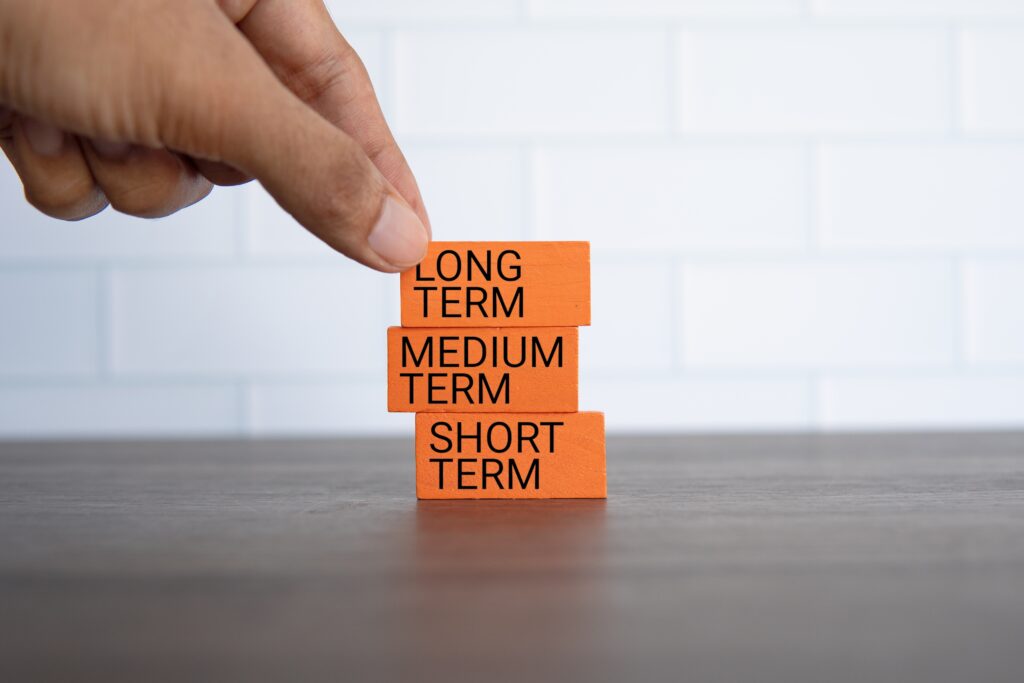
This path usually makes the most sense when:
- You are buying something huge, like heavy machinery, vehicles, or a new building.
- You need small, easy-to-manage monthly payments.
- The investment will keep making you money for years to come, not just a few months.
- You want to protect your everyday cash flow, even if it means paying a bit more in total interest down the road.
Neither choice is a silver bullet. A short-term loan that works perfectly for a $15,000 equipment fix would be a nightmare if you tried to use it for a $250,000 expansion. And a long-term loan meant for a five-year plan is way too much hassle just to buy a quick batch of inventory. Matching the timeline to the goal is the secret to getting this right.
How to Match Your Loan Term to Your Business Goal
So, how do you actually pick? Start by looking at what you are buying and figuring out how long that specific thing will help your business.
Here is an easy way to map it out:
- Quick, one-time costs (like stocking up on inventory for a busy season, fixing a broken tool, or covering a slow month) go perfectly with short terms. You are fixing a quick problem, so you should pay it off quickly.
- Assets that last a long time (like delivery trucks, specialized tools, or machinery) are a great match for longer terms. Ideally, the length of the loan should match how long that equipment will be working for you.
- Remodeling or expanding usually requires a longer term because it takes time for new customers to find you and for that investment to actually start paying off.
- Consolidating debt depends on what bills you are combining. If you are grouping together a bunch of small, short-term debts, a medium-length term is usually best to give you lower payments without dragging the debt out forever.
- Hiring staff or launching marketing campaigns can go either way. It completely depends on how fast you expect that new hire or ad campaign to bring in fresh revenue.

A good golden rule: try not to take out a long-term loan for something you will use up in a few months, and don’t take out a short-term loan for a major project that will take years to pay off. When the loan term and the purpose don’t match, paying the money back starts to feel like a massive headache rather than a helpful tool.
Term Loan vs Line of Credit: A Quick Comparison
While we are on the topic of borrowing, let’s clear up a common point of confusion: a term loan versus a line of credit. A lot of business owners mix these two up, which is totally fair since they are both ways to get cash.
Here is the actual difference between the two in everyday language:
- A term loan gives you all the cash at once upfront, and you pay it back on a strict, set schedule. It’s perfect for big, planned projects where you know exactly how much cash you need.
- A business line of credit gives you a set borrowing limit. You can take out cash whenever you need it, pay it back, and then borrow it again. It’s ideal for ongoing, unpredictable expenses.
So, what is the difference when it comes to paying the money back? With a term loan, your monthly payment is set in stone from day one. With a line of credit, your payment changes based on how much money you have actually borrowed at that moment. When you are deciding between a loan and a credit line, look at the type of problem you are solving. Is it a one-time purchase with a clear price tag? Go with a term loan. Is it a fluctuating need, like covering bills during your slow season? A line of credit will probably serve you better. Plenty of businesses actually use both. They use a term loan for a big expansion project and keep a line of credit open in the background just in case of emergencies. You don’t have to choose just one.
Mistakes to Avoid When Choosing a Loan Term
A few classic blunders tend to trip up business owners when they are picking a loan term.
Keep an eye out for these traps:
- Picking the longest term just because it has the lowest payment: Tiny monthly payments look great on paper, but stretching a loan out way longer than necessary means you are just handing over extra interest money to the bank for no good reason.
- Picking the shortest term just to get out of debt faster: Being aggressive sounds good, but if your payment is too high, it will drain your bank account every month and leave you zero room for everyday emergencies.
- Ignoring why you are borrowing the money in the first place: Using a short-term loan for a long-term project (or vice versa) almost always creates major financial friction down the road.
- Forgetting about your slow seasons: If your business makes less money in the winter or summer, you need to be absolutely sure you can still afford your loan payments during those dry months.
- Skipping the fine print: Things like early payoff penalties, hidden fees, and shifting interest rates can completely ruin a good loan term. Always read the boring details before you sign.
Spending a few extra minutes thinking about these points now will save you a massive amount of stress later.
How Small Biz Heroes Helps You Pick the Right Term
Trying to figure all this out by yourself can feel completely overwhelming, especially if it is your first time looking for a business loan. That is exactly why we are here. At Small Biz Heroes, we look at your actual business, what you need the cash for, how your revenue moves, and what kind of payment you can realistically afford. Then, we match you with a lender and a term that actually makes sense for your life. We never push you toward the biggest loan or the longest term just because. Our goal is to find funding that helps your business grow, not something that weighs you down. Whether that means a quick short-term loan, a multi-year long-term loan, or a flexible line of credit, we will help you cut through the noise and find the right fit.

Frequently Asked Questions
- What is a term loan?
It’s a setup where you get a lump sum of cash upfront and pay it back over a fixed amount of time with regular, usually monthly, payments. - What does loan term mean?
The loan term is simply the total amount of time you have to pay the money back, from the day the cash hits your account to the day you make your final payment.
- How do I know if I need a short-term or long-term loan?
Look at what you are buying. Quick, temporary expenses usually call for a short-term loan. Big investments that will help your business for years call for a long-term loan.
- What is a characteristic of a term loan that makes it different from other financing?
Predictability. You know exactly how much you are borrowing and exactly what your payments will be from the very start.
- Is a longer loan term always cheaper?
No. While a longer term makes your individual monthly payments smaller, it usually ends up costing you much more in total interest over the life of the loan.
- What’s the difference between a term loan and a line of credit?
A term loan gives you all the cash at once with a fixed payback schedule. A line of credit is a pool of cash you can tap into whenever you want, and you only pay back what you actually use.
- Can I pay off a term loan early?
Most lenders will let you, but you always want to double-check for any “prepayment penalties” before you sign the contract.
- Can Small Biz Heroes help me figure out the right term for my business?
Absolutely. We look at your specific business goals and financial health to match you with a loan structure that actually fits your needs, rather than giving you a generic, one-size-fits-all option.
Conclusion
Picking a loan term isn’t just a boring box you check on an application. It is a major financial decision that dictates your monthly budget, your total costs, and how much breathing room your business will have moving forward. Term borrowing works beautifully when the length of the loan matches the lifespan of whatever you are buying whether that is a quick fix you pay off in a flash or a major investment you chip away at for years. There is no single “perfect” answer for everyone. What really matters is being honest about your cash flow and picking a timeline that helps you hit your goals instead of dragging you down. If you aren’t sure which path to take, don’t worry. Ready to find a loan term that actually makes sense for your business? Get in touch with Small Biz Heroes today, and let’s figure out the perfect fit together.